1. It provides legal protection
This might come as a surprise, but there is no legal requirement for ecommerce businesses to provide Terms and Conditions on their site. Because of this, many businesses make the mistake of thinking that T&C aren’t that important. But you risk leaving yourself open to legal action if you don’t have one.
Legal disputes cost a lot of time and money, and for the most part can be easily avoided if you put some pre-emptive groundwork in — i.e., your Terms and Conditions. When you set very clear rules of conduct, you can stave off a dispute before it happens. So, no matter what it is that you sell on your ecommerce site, you should make sure you are protected against any nasty surprises, such as misuse of your site or plagiarized content.
2. Your T&C can build customer trust
Being transparent with how you operate makes you much more trustworthy to consumers, compared with you having no Terms and Conditions available at all. This is important because trust is among the biggest concerns that consumers have when it comes to online purchases. Having well-crafted T&C could well be the difference between your customer choosing you over a competitor.
What to include in your Terms and Conditions
Now that we’ve discussed the importance of having Terms and Conditions for your ecommerce site, let’s discuss what it should include. Every website is different so, the sections of your T&C may vary, but here are some of the most common components typically included in an ecommerce site’s terms.
1. Information accuracy
If you are running an ecommerce site with a lot of product pages, it can be a full-time job making sure that all the information is accurate. It’s one of the most likely errors that will occur in your online store, so it opens the door to a lot of customer service issues. For this reason, it’s very important that you stipulate that information can sometimes be inaccurate and change without notice.
This section should mention that despite your best efforts, on-site information might not be up-to-date and that certain information (e.g., prices, product descriptions, stock quantities) may change without notice.
Below is an extract from clothing retailer H&M’s T&C section on information accuracy:
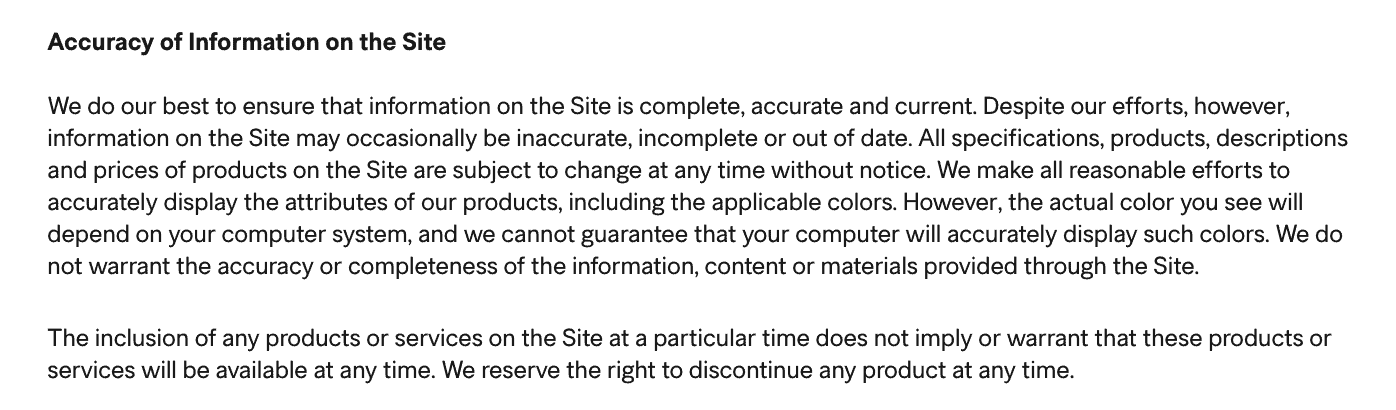
H&M clearly states that information on its site is not always up to date, and that information (including pricing) can change at any time. As a clothing retailer, it also makes specific reference to how the color of garments may look different online due to screen configurations. This is important, considering that 54% of consumers have returned items bought online due to complaints over color.
2. Terms of sale
This part of your T&C should set out clear terms on how products can be purchased, whether there are any restrictions e.g. the restriction of sale for age-restricted products and services, and what happens in the event that a product cannot be supplied.
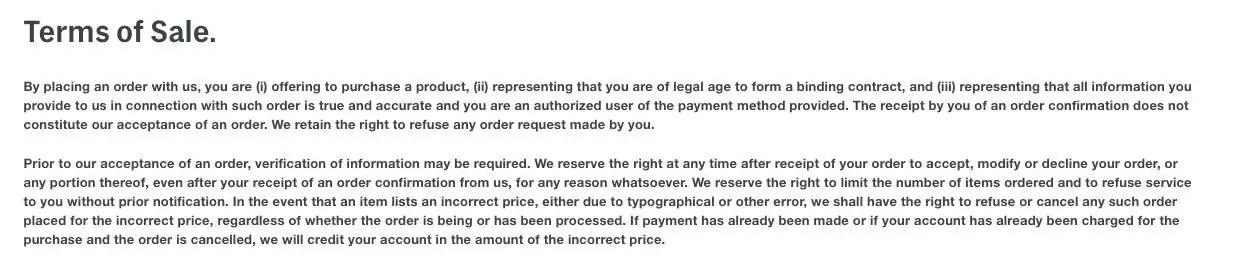
HBO’s ecommerce T&C outlines this quite well. Its “Terms of Sale” section mentions that by placing orders on the site, the customers represent that they are of legal age and that the information they provide is true and accurate. The terms also mention that HBO takes steps to verify customer information prior to accepting and order and that the company has the right to accept, modify, or decline orders.
3. Payment terms
This is where you will cover any terms relating to the payment of the product/service you sell. This is one of the biggest areas of liability for your business, so you need to make sure that your customers understand the expectations surrounding online transactions.
The payment terms section of your site should include:
- The payment methods you accept (Visa, Mastercard etc.)
- Missed/late payment conditions
- How you will handle refunds/returns
- How you will handle payment disputes
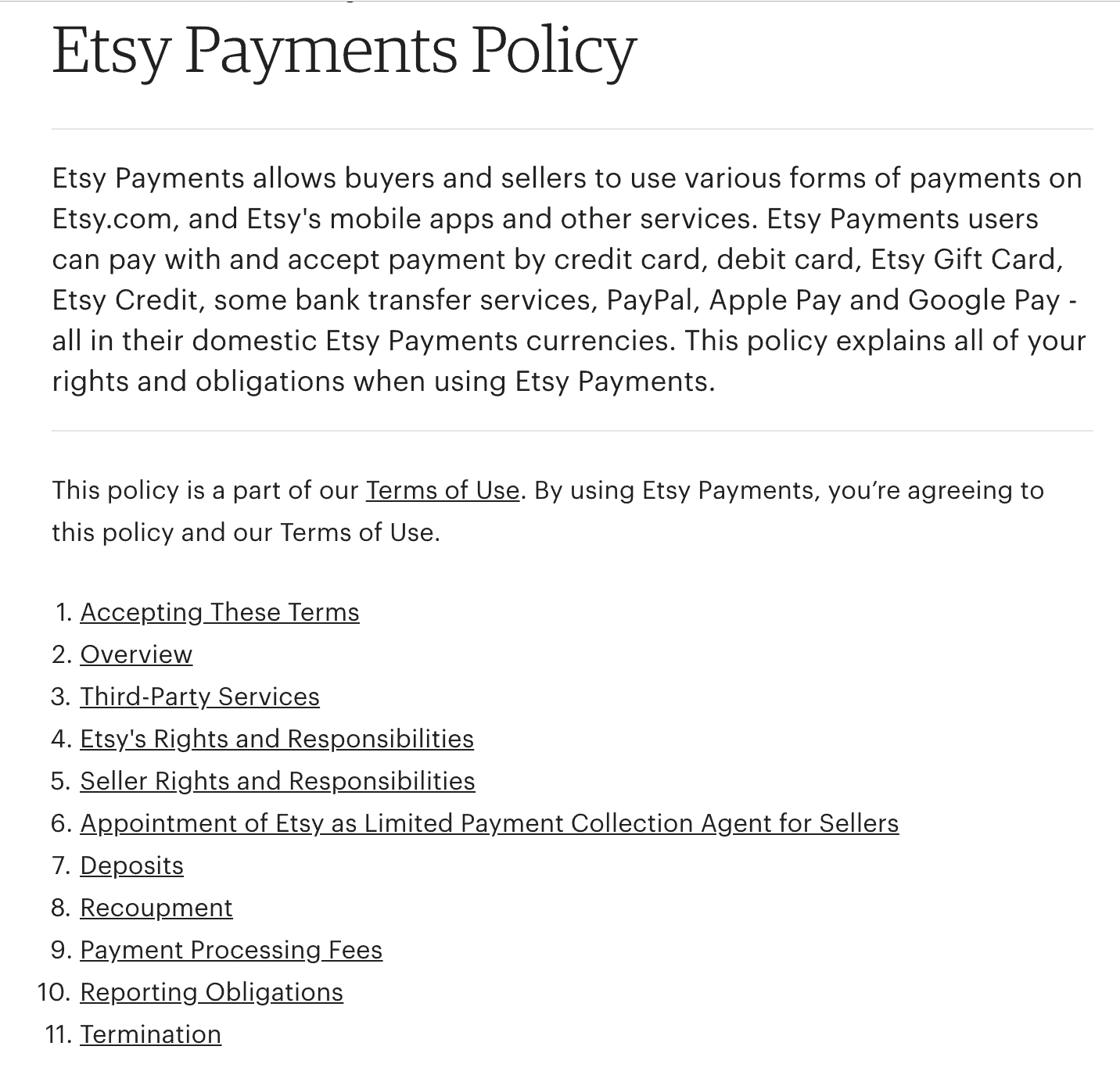
Because they are an intermediary between the buyer and seller, Etsy has very comprehensive T&C for its site. It establishes the rights and responsibilities of both the buyer and the seller. It also states that in agreeing to their T&C, the customer is also agreeing to the T&C of third-party services such as PayPal as well.
4. Shipping & delivery
This is an area that has a lot of potential for error in ecommerce. A delivery could get delayed, damaged in transit — or not arrive at all. This is especially important if you use a 3PL provider or freight company. This is because your business no longer has direct control over what happens to orders. But the buck stops with you, as far as your customer is concerned. Although this is important for any seller, it has particular relevance to those who sell products that are more logistically difficult to fulfill.
That’s why it’s essential to outline your shipping and delivery terms, in which your discuss the amount of time it takes to fulfill orders, how costs are calculated and whether extra fees are applicable, and what your level of responsibility includes when third parties are involved.
If we go onto IKEA’s Terms and Conditions, we can see that they have laid a specific page just for delivery and shipping information:


0 Reviews